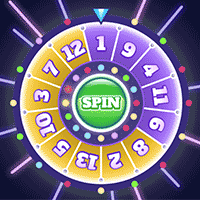

Thirteen unique outcomes
Each round uses the numbers 1 through 13. The first spin sets the current value. Every result is removed for the rest of that round, so the wheel becomes smaller and the available probability changes continuously.
Why removal matters
Suppose the current number is 6. On a fresh wheel, seven values are higher and five are lower. If several high numbers have already appeared, HIGHER may no longer be the safer direction. The visible wheel history therefore carries real strategic information.
Edge numbers are powerful
A current 1 can only move higher, and a current 13 can only move lower, provided another number remains. Values near the edges also create strong directional advantages. These positions are ideal for building a pot or banking after one more high-confidence prediction.
Middle numbers create tension
Values around 6, 7, and 8 often split the remaining outcomes more evenly. They are not automatically bad, but they demand a precise count. A middle number after many removals can be safer than it first appears.
The wheel can exhaust
If players keep surviving until no eligible number remains, surviving players are automatically banked. This is uncommon, but it shows why removal is more than a visual effect: the round has a finite sequence of outcomes.
Displayed percentages
The game calculates the proportion of remaining numbers above and below the current value. These percentages are conditional on the current wheel state. They are more useful than memorizing fixed odds for each number.
Think in sets, not streaks
Previous high or low results do not create a mystical balancing force. They matter only because those exact numbers are no longer available. Focus on the remaining set rather than assuming the wheel is due for a particular direction.